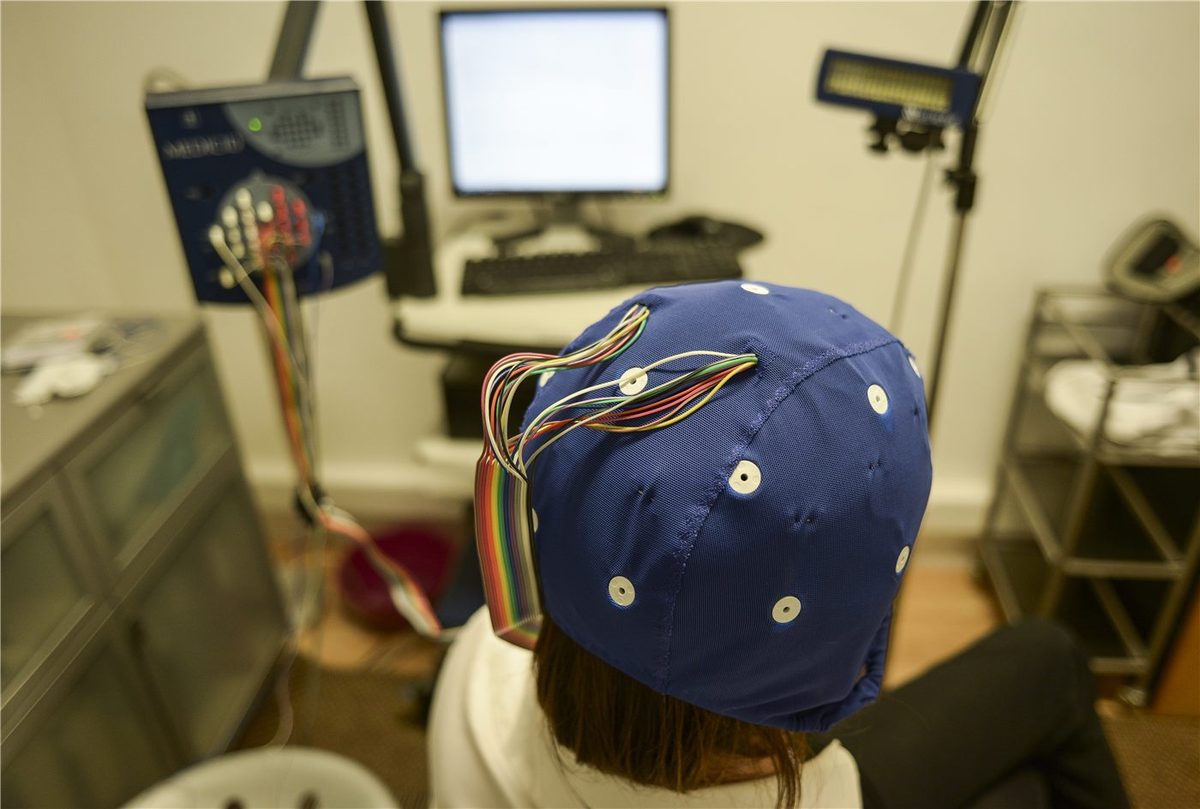
MuEducation · MuLabs
Three courses.
Every claim referenced.
Neuroscience taught the way it is actually known — with a source on every claim, an evidence level on every mechanism, and contested models named as contested rather than quietly repeated. Built from a decade of clinical practice and taught by the person who runs it.
- 3
- courses, which can be taken in any order
- 41
- recorded segments of about twenty minutes
- 9
- teaching decks behind them, built and taught live
- 0
- claims without a reference behind them
How they are built
The honesty is
the method.
Most neuroscience teaching in the wellness world repeats a handful of appealing stories long after the field has moved on. These courses are built the other way round: the source comes first, and where the evidence is thin or contested, the course says so and keeps going.
A reference on every claim
Each mechanism slide carries its citation, and each class ends with its reference list. Nothing is asserted because it sounds right or because everyone repeats it.
Contested models named as contested
The triune brain, polyvagal theory, polyphasic sleep — all taught, all clearly marked as models under dispute, with what the dispute actually is. You leave able to argue either side.
Safety is a module, not a disclaimer
Contraindications, scope of practice and when to refer out get their own teaching time. Anyone who works with other people’s nervous systems needs that more than another mechanism.
The courses
Three of them.
The first two were built as one body of teaching for the Alchemy Rewire curriculum and are now split where the subject naturally divides: what is settled, and what is still at the edge. The third is in development.
Fundamentals of Neuroscience
The working model: how the brain is built, how it runs on chemistry and electricity, how the autonomic system and the vagus govern state, what breath actually does to it, and what happens when regulation is overwhelmed. This is the course for anyone who guides other people’s nervous systems and wants to know what they are touching.
- 01Foundations of the Brain9 segments
- 02Autonomic, Vagus & Trauma6 segments
- 03The Respiratory Engine5 segments
- 04Safety & Contraindications4 segments
- 05Integration & Sustainability4 segments
Covers neuroanatomy and the living cell, neurochemistry, states and neuroflexibility, brain networks and brainwaves, heart rate variability and coherence, CO₂ and the hypoxia–hypercapnia distinction, the window of tolerance, and neuro-somatic scope of practice.
The Neuroscience of Aether
The edge of the field, handled carefully. Real bioelectricity — voltage gradients, fields, regeneration — and then the territory where physics, philosophy and wishful thinking are routinely confused for one another: the historical aether, the quantum vacuum, akasha and prana and qi, parapsychology, altered states and the theories of consciousness that compete to explain them.
- 01The Energetic & Bioelectric Body5 segments
- 02Psychedelics & Altered States8 segments
What this course is not. It does not claim that the aether exists — it teaches the Michelson–Morley experiment of 1887 that ruled it out, and why the quantum vacuum that replaced it is a different thing entirely. Akasha, prana, qi and pneuma are taught as philosophy and history, not as physics. Parapsychology is covered with its actual replication record, failures included. The point of the course is to be able to tell these apart.
Neuromodulation & Neurotechnology
The applied course: how a nervous system is measured and trained with instruments rather than with instruction. Quantitative EEG, neurofeedback, the stimulation methods and the devices — what each one does, what the evidence supports, where the regulatory lines sit, and how to read a recording without over-reading it.
This course is being written now and is not yet open. Write to us and we will tell you when it is, before it is announced anywhere else.
Format
Recorded in twenty-minute
pieces. Or taught live.
The same material exists in two forms, and they are priced and scheduled separately.
Online, self-paced
Each class is cut into segments of roughly twenty minutes, so a module fits into the gaps in a working week rather than demanding an evening. Watch in order or jump to what you need.
Live, in a retreat
The full decks are taught in person, about two hours per class, with questions throughout. This is the form they were built for and the form that works best for facilitators in training.
Taught by one person
Not a panel of guest lecturers. The same voice through all of it, which is the only way the honesty survives contact with the material.
In English or Portuguese
The recorded course is in English. The live teaching runs in either; say which when you write.
What it costs
Priced as professional training,
because that is what it is.
Each course stands on its own and carries a certificate of completion. Taken together they are the certification, which adds the live hours.
Course one
Fundamentals of Neuroscience
890 €
28 segments, about nine hours. Certificate of completion.
Course two
The Neuroscience of Aether
690 €
13 segments, about four and a half hours. Certificate of completion.
Course three
Neuromodulation & Neurotechnology
1 090 €
In development. Write and we will tell you when it opens, before it is announced.
The certification
All three, with the live hours
Every segment of all three courses, a live question-and-answer hour with Francisco each month while you are studying, and the MuLabs certification on completion. The live hour is where the arguing happens, and it is the part facilitators say changes how they work.
2 670 € separately
1 990 €
Prices include IVA at the Portuguese rate of 23%. Online courses are taxed where the buyer is, not where we are, so if you are buying from outside Portugal — or through a company with an EU VAT number — write to us before you pay and the invoice is issued accordingly. The live retreat version of this material is quoted separately.
Who teaches it
One teacher,
all of it.
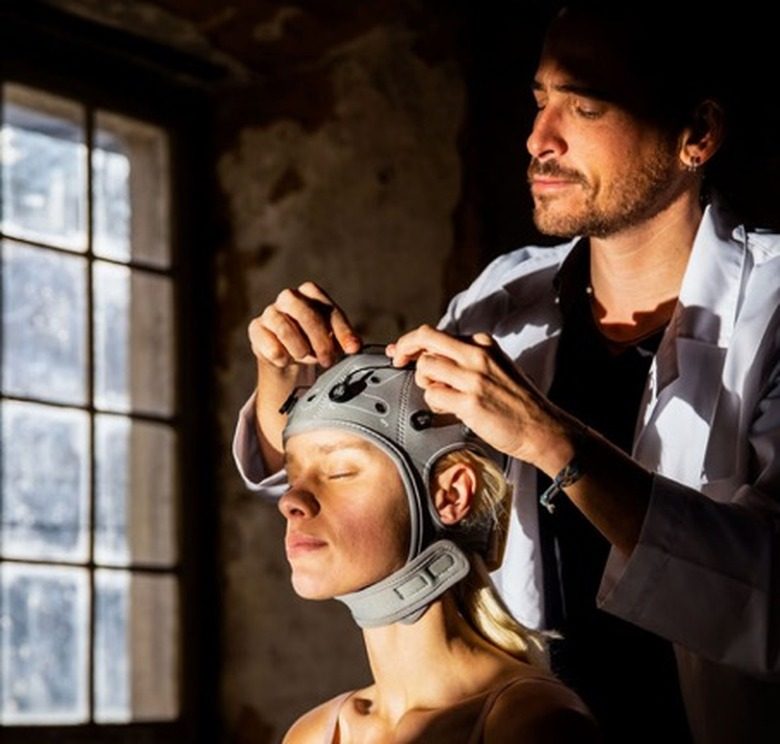
Francisco Marques-Teixeira
Neuroscience · neurofeedback · founder of MuLabs
MSc Neuroscience, King’s College London. President of the Portuguese Neurofeedback and Neurotechnology Association. Ten years of clinical practice, and the author of the PRYSM method MuLabs uses to turn brain recordings into something a person can read.
The courses are the teaching material he uses with facilitators and clinicians, written up and recorded rather than invented for an audience.
Tell us which one.
We will tell you when it opens.
Write with the course you want and whether you would rather have it recorded or live, and we will send the dates and what it costs.
Once a month: what we are measuring, studying and making. No spam.